Part 4: Combatting Homelessness Among Vets

America will begin phasing out its longest foreign conflict next month with the drawdown of troops from Afghanistan. For thousands of soldiers, a new battle will begin: to adjust, and to become successful here at home.
Not all will succeed, and the most vulnerable may end up on the street.
But Philadelphia is a national center for trying to end veteran homelessness.
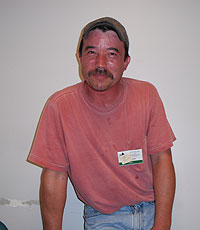
"I just want a job to where I can keep a roof over my head, be self-supportive -- that's all I want," says Michael Yoo (right). Things were going okay for him when he first came back from the Gulf. He got a commercial driver's license and drove a truck, but then something strange happened to his blood pressure.
"I couldn't calm things down unless I was in a fetal position," he recalls. "That was nuts."
Yoo's life then followed the kind of downward swirling trajectory that has become familiar to Vincent Kane, the Philadelphia-based director of the National Center on Homelessness Among Veterans.
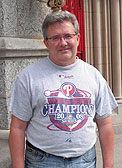
"There is something about the veteran population in this transition from military life back to civilian life that really has caused some difficulties," Kane (right) notes.
It might begin with a physical wound like traumatic brain injury (see Part 1), which is often accompanied by post-traumatic stress disorder (see Part 2), that might lead a vet to self-medicate with drugs or alcohol -- which often results in legal issues that hinder subsequent employment.
"They all kind of come together in a 'perfect storm' that does leave these veterans a bit more vulnerable to becoming homeless," Kane notes.
Extended interview with Vincent Kane
Podcast
He says that veterans make up 16 percent of homeless adults, but the good news is that the Veterans Administration is actively working on reversing the trend.
The Veterans Multi-Service and Education Center opened here in Philadelphia two years ago, and along with HUD and the Labor Department it is identifying the most vulnerable veterans and getting them housing with services that address the underlying problems.
Yoo, the vet looking for work, has found help at the Multi-Service Center.
"It may not be immediate results, but they'll at least get you down the right road," he says. "They're pointing me in the right direction, or at least a different direction than everybody else had been pointing me (laughs)."
Reported by Pat Loeb, KYW Newsradio 1060
Listen to the KYW Regional Affairs Council series, "Coming Home," by Pat Loeb...
● Part 1: The 'Signature Injury' of This War
Podcast
● Part 2: Post-Traumatic Stress Disorder
Podcast
● Part 3: Combatting Joblessness Among Vets
Podcast
● Part 4: Combatting Homelessness Among Vets
Podcast
Additional e-x-t-e-n-d-e-d podcasts:
● Pat Loeb interviews traumatic brain injury survivor Lt. Sam Console
Podcast
● Pat Loeb interviews traumatic brain injury expert Kacy Cullen
Podcast
● TBI survivor Sam Console talks about post-traumatic stress disorder (PTSD)
Podcast
● Gulf War veteran Kevin Miracle talks about living with PTSD
Podcast
● Dr. Edna Foa of the University of Pennsylvania describes her "prolonged exposure" therapy for PTSD
Podcast
● Marsha Four, director of the Philadelphia Veterans Multi-Service Center, on veteran unemployment
Podcast
● Kevin Miracle, a once-jobless Gulf War vet now working at the Philadelphia Multi-Service Center
Podcast
● Vincent Kane, director of the National Center on Homelessness Among Veterans
Podcast